LUNEDÌ 12 OTTOBRE 2026




 
|

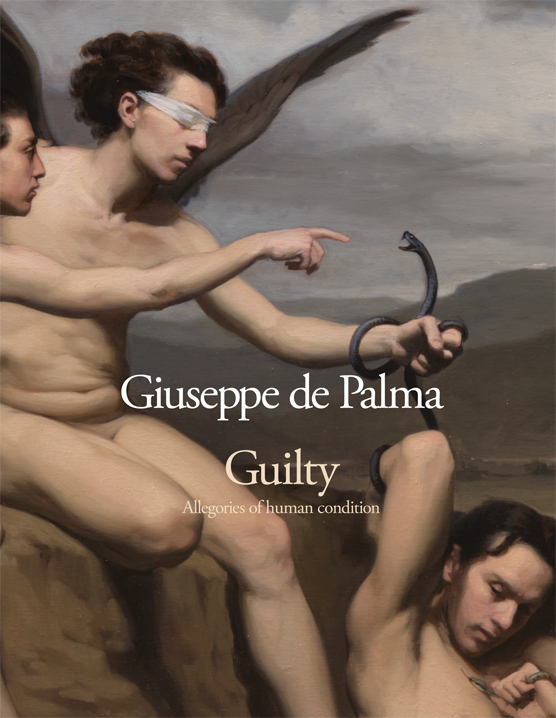 |
Giuseppe de Palma · Guilty
Allegories of human condition
|
EUR 36,00
 |
|
Ci sono immagini che chiedono soltanto di essere guardate e immagini che, invece, chiedono di essere interrogate. La pittura di Giuseppe de Palma appartiene a questa seconda categoria. Le figure che popolano le sue tele non raccontano semplicemente delle storie: danno corpo a domande. Utopia, Obbedienza, Desiderio, Pulsione, Legge, Creazione, Colpa, diventano presenze visibili, personaggi di un teatro simbolico nel quale ciò che normalmente appartiene alla dimensione invisibile della coscienza assume un volto, un corpo, un gesto. Sì, è una scelta profondamente inattuale e, proprio per questo, radicalmente contemporanea. In un tempo dominato da immagini destinate a essere consumate rapidamente, de Palma chiede allo spettatore qualcosa di diverso: tempo. Chiede di fermarsi, osservare, riconoscere i simboli, seguire i rapporti fra le figure e, infine, lasciarsi coinvolgere dalle domande che esse pongono. Sandro Barbagallo There are images that ask only to be looked at, and images that, instead, ask to be questioned. Giuseppe de Palma’s painting belongs to this second category. The figures that populate his canvases do not simply tell stories: they give form to questions. Utopia, Obedience, Desire, Compulsion, Law, Creation, Guilt become visible presences, characters in a symbolic theatre in which what normally belongs to the invisible dimension of consciousness takes on a face, a body, a gesture. Yes, it is a profoundly anachronistic choice and, precisely for this reason, a radically contemporary one. In a time dominated by images intended to be consumed rapidly, de Palma asks the viewer for something different: time. He asks the viewer to stop, to observe, to recognise the symbols, to follow the relationships between the figures and, finally, to allow themselves to be drawn into the questions they pose. Dettagli

Formato: cm 24x31 Pagine: 112 Illustrazioni: 64 a colori ISBN: 978-88-8431-991-3 Anno di pubblicazione: 2026


|
||
 |
Il Carrello è Vuoto. |
 |
    |
|

|
|
|
|

|
|
|
|

|

